
The Government has approved two legislative packages drafted by the Ministry of Labour and Social Affairs (MPSV), which we have reported on previously, namely the draft Platform Work Act and the draft amendments to the Labour Code, the Employment Act and other laws. Both legislative packages are intended to implement European legislation (the Platform Work Directive and the Pay Transparency Directive). The draft legislation now proceeds to the Chamber of Deputies for debate. Both bills are scheduled to come into force on 1 January 2027.
Pay transparency
Compared with the original draft amendment of March 2026, the comment procedure brought no fundamental changes regarding pay transparency, only minor clarifications. It therefore still holds that from 1 January 2027 employers will face a number of new obligations, the most significant of which is the obligation to establish a remuneration system in the form of an internal regulation / collective agreement. Even though the legislative process has not yet been completed, it is high time to start preparing the internal regulation and to focus primarily on a detailed description of individual job positions and their assignment to the appropriate job groups and on gaining an overview of all monetary benefits provided to employees (bonuses, benefits, etc.).
Other new obligations for employers:
Illegal work and disguised employment (“švarcsystém”) – fines for “employees” abolished, tougher penalties for “employers”
Compared with the original draft of March 2026, the legislator has once again changed the conditions for penalising illegal work and disguised employment. The characteristics of dependent work are being redefined: the law now specifies the criteria by which the relationship of superiority and subordination between employer and employee is to be (exclusively) assessed, namely organisation of work by the employer, performance of work during working hours and in accordance with the employer’s instructions, and supervision of work performance.
From 1 January 2027, the fine for disguised employment is to be abolished for persons performing illegal work under Section 5(1)(e) of the Employment Act (i.e. persons performing work that has the characteristics of dependent work but is not performed within an employment relationship). However, the fines for “employers” (persons enabling the performance of illegal work) remain unchanged – up to CZK 10 million. In addition, further financial sanctions for illegal and undeclared work are to be introduced: an obligation to pay the outstanding contributions and penalty surcharges (and this solely on the basis of the inspection report of the Labour Inspectorate, not only after a final decision on the offence)!
Platform Work Act
The draft of the new act has not undergone any fundamental substantive changes since the version published in March 2026. A new provision has been added stipulating that if a platform worker states in a written complaint facts indicating that the characteristics of dependent work are met, the Labour Inspectorate will invite the platform to comment within 90 days. If the platform fails to explain sufficiently credibly that the relationship is not an employment relationship, the Labour Inspectorate will carry out an inspection.
Below we summarise further key points (and newly introduced obligations) of the Platform Work Act:
…

Labour law
Data Protection
Dispute resolution, arbitration, mediation
Whistleblowing
Corporate and commercial law

Labour law
Dispute resolution, arbitration, mediation

bpv BRAUN PARTNERS advised the CREDITAS Group on the acquisition of a 100% stake in the British energy group InterGen. The sale was completed in these last few days of January and was subject to the usual regulatory approvals.

Draft implementing legislation has been published in the e-library of forthcoming legislation for government action. Namely, the following drafts have been published:
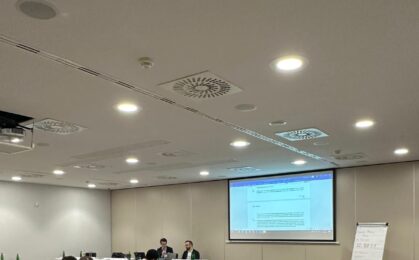
Last weekend, our Slovak office hosted again our bpv Academy, focusing this year on Mergers & Acquisitions.