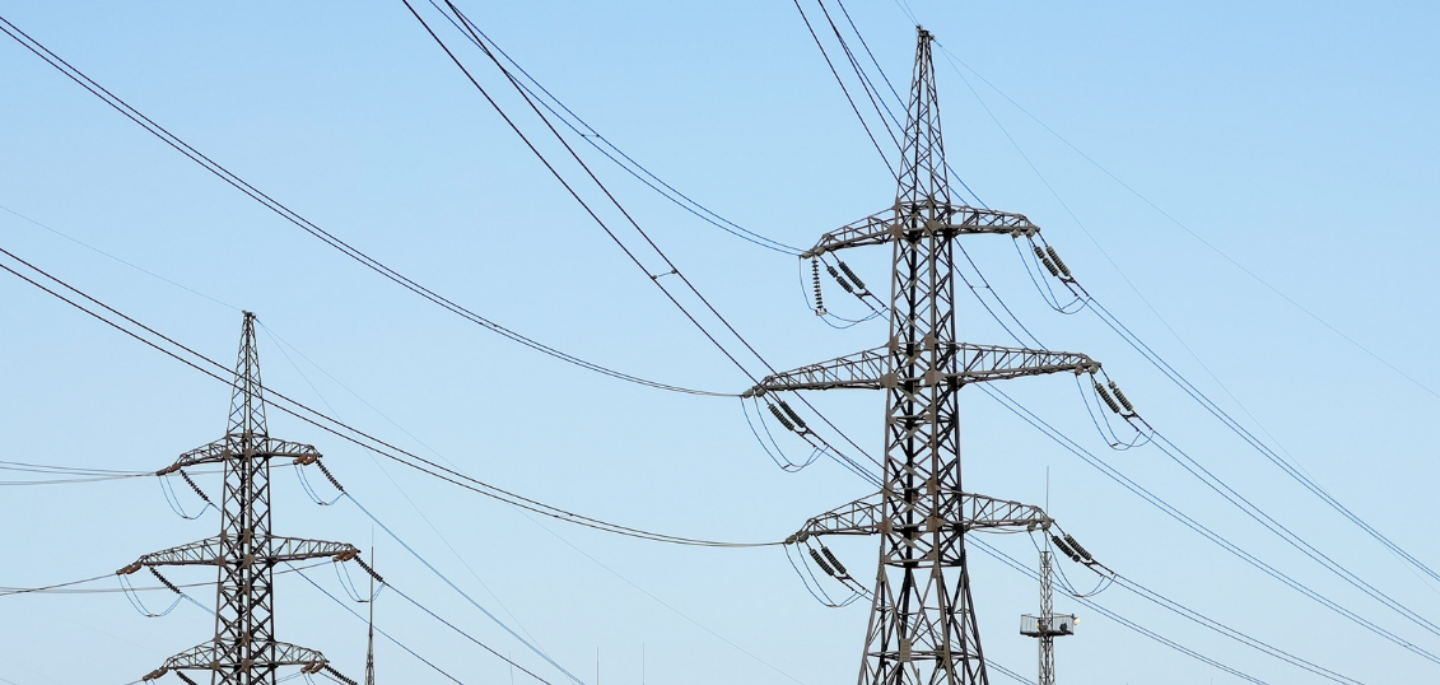
Capacity mechanisms are currently coming to the forefront as a key instrument for ensuring sufficient electricity generation capacity in the Czech Republic. It cannot be assumed with certainty that the installed capacity required for the Czech Republic will be secured purely on a market basis, particularly in light of the expected deterioration in resource adequacy, i.e. the ability of the electricity system to meet electricity demand over time.
In this context, reference can also be made to the conclusions of the transmission system operator ČEPS, which in its latest resource adequacy assessments recommends securing additional installed capacity beyond the planned construction of new nuclear sources.[1] As such, capacity mechanisms have already been identified as one of the possible solutions.[2] A shortage of generation capacity is indicated by the risk of exceeding the so-called reliability standard, which expresses the maximum number of hours per year during which it may not be possible to satisfy all electricity demand. In the Czech Republic, this standard is set at 6.7 hours per year,[3] while current resource adequacy assessments indicate a risk of its breach as early as 2026.[4]
Pursuant to Article 20(3) of Regulation (EU) 2019/943 of the European Parliament and of the Council of 5 June 2019 on the internal market for electricity (the “Electricity Market Regulation”), the primary obligation of a Member State is to assess whether potential resource adequacy concerns can be addressed by removing regulatory and administrative barriers or remedying market failures. For this purpose, the Czech Republic has prepared an implementation plan, i.e. a document in which it seeks to define specific steps to eliminate such obstacles. It is precisely in relation to this implementation plan that, on 12 March 2026, the European Commission (the “Commission”) issued its opinion (the “Commission Opinion”) pursuant to Article 20(5) of the Electricity Market Regulation. Where the adopted measures do not lead to sufficient improvement, the use of instruments such as capacity mechanisms becomes possible. By issuing the Commission Opinion, one of the fundamental conditions for their introduction has been fulfilled, as Article 21(5) of the Electricity Market Regulation makes their implementation conditional upon the existence of such an opinion.
Capacity mechanisms are not entirely unknown to the Czech legal framework. As part of several amendments to the Energy Act[5] during 2025, Section 35 was introduced, empowering the Ministry of Industry and Trade to adopt a measure of a general nature establishing a capacity mechanism. While the provision itself is relatively brief, it correctly refers to the relevant provisions of the Electricity Market Regulation, which contain the core legal framework governing capacity mechanisms.
The Electricity Market Regulation defines a capacity mechanism as a measure aimed at ensuring the achievement of the necessary level of resource adequacy by remunerating resources for their availability, as distinct from support for the provision of ancillary services or congestion management.[6] In practice, this constitutes a mechanism incentivising generators to build and maintain installed capacity, rather than to supply electricity as such or to provide balancing services.
Capacity mechanisms have already been implemented in a number of EU Member States, in various forms.[7] A basic distinction can be drawn between the creation and maintenance of a strategic reserve, which is kept outside the electricity market, and other forms of mechanisms integrated into the market.[8] The specific model that the Czech Republic will choose is not yet clear.
At the same time, it must be noted that capacity mechanisms will generally constitute State aid within the meaning of Articles 107 and 108 TFEU, and are therefore subject to notification and approval by the Commission.[9] The next step must therefore be taken by the Czech Republic, which is required to duly notify the intended capacity mechanism to the Commission and await its approval prior to its implementation.
In light of the potential impact of introducing a capacity mechanism on the electricity market and the energy sector in the Czech Republic, we will continue to monitor developments in this area and keep you informed.
….
….

Banking and financial law, capital markets
Energy law and renewable energy
M&A
Insolvency, restructuring and preventive restructuring
Dispute resolution, arbitration, mediation
Real estate and construction law

Energy law and renewable energy
Corporate and commercial law
Dispute resolution, arbitration, mediation

Energy law and renewable energy
Insolvency, restructuring and preventive restructuring
EU law

The Prague team of bpv BRAUN PARTNERS welcomes a new addition! With effect from 1 March 2023, it will be strengthened by Mgr. Ing. Lenka Charvátová, a lawyer specialising in civil law, litigation, corporate and commercial law and insolvency law.


We have been again ranked in Chambers 2024, a prestigious legal directory that evaluates law firms and lawyers around the world.